What It Truly Means to Be an American and a New Declaration Against the Abuses of Government after 250 Years
by Thomas Drake
On 4 July 2026, the United States turned 250 years old as it celebrated its Semiquincentennial anniversary and the birth of a new nation. But the question that hangs over every firework and every flag is not merely how far the United States of America has come, but what exactly, are We the People of America celebrating? The answer is both simpler and more demanding than most people acknowledge. To be American is to be the civic custodian of an idea. And an unfinished, even bitterly and violently contested, luminous idea that no army, no demagogue, and no generation has yet managed to fully extinguish.
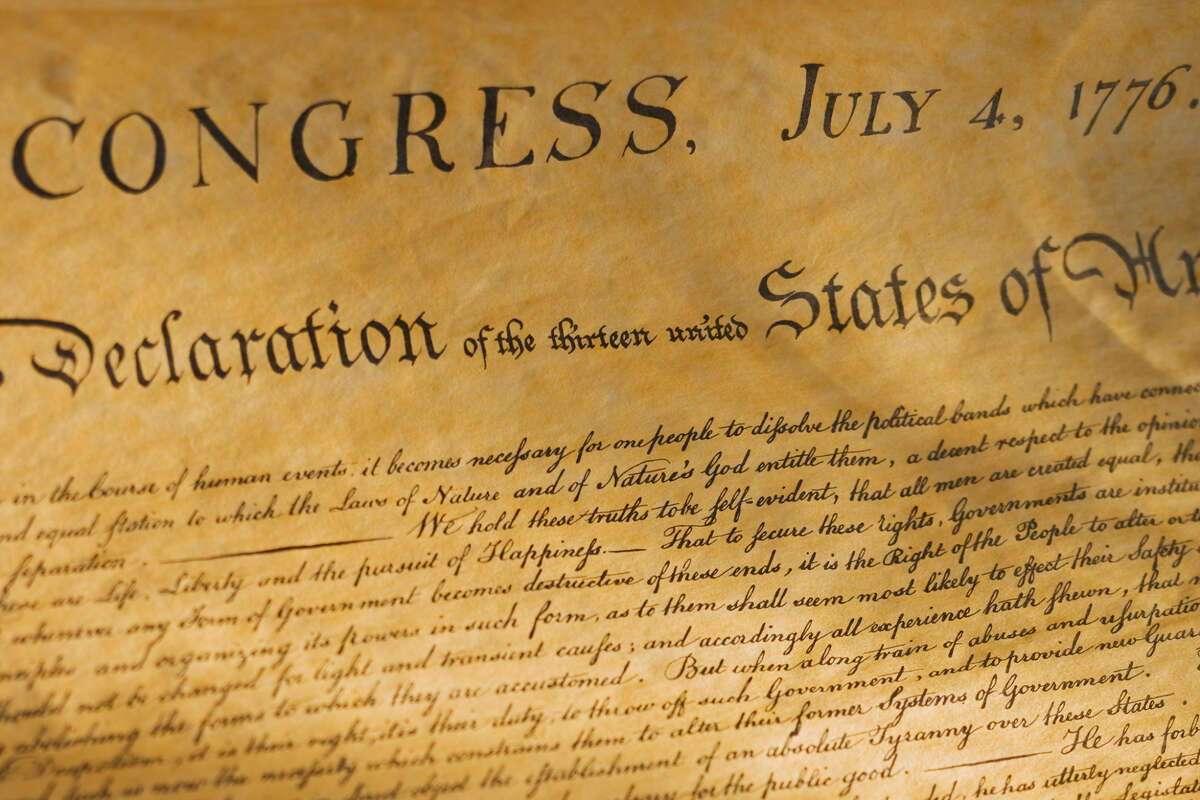
America was never just a place. Most nations are defined by blood, soil, language, or dynasty. America was not. It was born from parchment and the audacious claims written on it. As the National Archives records, the Declaration of Independence does not merely announce separation from the British Crown, because it also states the principles on which our government, and our very identity as Americans, are based. The James Madison Institute put it plainly, "The United States of America is unique among nations in that it is primarily built around a set of ideas." Whereas France has its language and history, Germany its Volk, Japan its ancient culture – America has a creedal proposition. And a creedal proposition can be argued, rejected, subverted, betrayed and, yes crucially, redeemed.
This proposition was radical for 1776 and remains radical today. It posits that all human beings are created equal, endowed by their Creator with certain unalienable rights to include life, liberty, and the pursuit of happiness and that governments exist not to grant those rights, but to secure them, deriving their just powers from the consent of the governed. This was not merely political theory. It was also a higher claim dressed in Enlightenment language, drawing on John Locke's natural law tradition that men exist in "a state of perfect freedom" and "a state of equality wherein all the power and jurisdiction is reciprocal." To be American, at its philosophical root, is to believe that no person is born booted and spurred to ride another, and that no king, no priest, and no oligarch or autocrat is entitled to rule over We the People without consent. It was a truly revolutionary proposition, despite the glaring hypocrisies and contradictions of the signers.
Before there was the American Revolution and a Constitutional Republic, there was a calling. In 1630, Puritan leader John Winthrop delivered his famous sermon aboard the Arbella, exhorting his fellow colonists that they would be "as a city upon a hill" and a phrase drawn directly from Matthew 5:14, with "the eyes of all people upon us." This was not national vanity. It was the conviction that this new community had invoked the natural laws of the Creator and with one another as a community of people to model something the world had never seen as a society where law governed rulers and ruled alike, where conscience could not be compelled, and where the common good took primacy over private interest, despite the realities of the base human condition.
That covenant spirit was woven into the Constitutional architecture after the utter failures of the Articles of Confederation. The Founders drew on Montesquieu, Locke, and their own hard experience of tyranny, and created the separation of powers between three branches, federalism, and a Bill of Rights a little later that amended the original Constitution and specifically because the people distrusted concentrated power. This is what distinguished the American experiment from every prior republic. It was designed, as the National Constitution Center noted, around the consent of the governed, liberty, equality, and the separation of powers as living, enforceable principles and not mere aspirations. Alexis de Tocqueville, the French political scientist who toured America in the 1830s, marveled at why representative democracy succeeded here while failing in post-revolutionary France. His answer? America had built habits of the heart that included civic associations, religious communities and voluntary organizations that disciplined citizens in "regularity, temperance, moderation, foresight, and self-command." The secret of America was not just its laws, but its very people.
Yet any honest argument about American identity must reckon with its darkest chapters and, paradoxically, that very reckoning proves the argument. The same document that declared all men were created equal was also signed by landowners and slaveholders. And then there was the forced removal and dispossession of the nations that made up the indigenous peoples. Paradoxically, these are the wounds that prove the principles of America's founding. The same republic that championed liberty chained millions. This is not a footnote. It is also a gaping wound at the nation's founding. Frederick Douglass, himself born into slavery, confronted this with scorching clarity on July 5, 1852, asking his white audience: "What, to the American slave, is your 4th of July?" His answer was devastating: "A day that reveals to him, more than all other days in the year, the gross injustice and cruelty to which he is the constant victim."
But Douglass did not abandon America. He did something far more demanding. He held America to its own standard. He declared the Declaration of Independence "the ring, bolt, and chain of your nation's destiny" and called the Constitution "a glorious liberty document," insisting that the principles contained in those instruments were saving principles, but only if the nation would live up to them for all the people. This is the dialectic at the heart of American identity. The gap between the ideal and the reality is not proof that the ideal is a lie. It is the engine of American moral progress. Abraham Lincoln, who cited the phrase "all men are created equal" no fewer than 35 times in his speeches, understood this. He saw it as a "stumbling block to tyranny" included in the Declaration not for the practical purpose of separating from Britain, but "for future use," as a seed planted to eventually destroy slavery itself. In the wake of a Civil War between a nation fundamentally divided, the 13th, 14th, and 15th Amendments; women's suffrage; Jim Crow, the Civil Rights Act – all grew from that single, explosive seed.
So what makes American American? That question is more compelling now more than ever as some now question who are really Americans and who deserves to be here. If being American is adherence to a creedal proposition as an idea, then American identity has several irreducible features that no other nation has assembled in quite the same way or combination together.
America is founded on a propositional founding, not an ethnic founding, despite the 'whiteness' of the founders. Unlike nations formed around ethnicity or dynasty, America was built on universal principles. This means anyone, from anywhere or there, who embraces those principles can become an American. Even the Heritage Foundation noted that American exceptionalism is grounded in natural law, not the nation-state because it is "not language, ethnicity, or even ideology that makes us great."
Another feature is self-governance as a sacred civic duty. The Founders believed in a government accountable to its citizens, and not a government that grants freedoms, but one that protects pre-existing freedoms. This principle of limited government, enshrined in the Constitution and the Bill of Rights added a bit later, remains the animating distinction of the American system of governance.
There is also the right to dissent and demand better. Douglass, Lincoln, Susan B. Anthony, and Martin Luther King Jr. are some of the greatest Americans among those who refused to let the nation rest comfortably in its contradictions, failures and foibles. And the American identity is not blind loyalty or performative patriotism. As Mark Twain wrote, "The modern patriotism, the true patriotism, the only rational patriotism, is loyalty to the Nation all the time, loyalty to the Government when it deserves it." To be American and American is to love the country enough to challenge it. And yet we are also seeing dissent criminalized.
Despite the dark chapters of xenophobia and blatant racism in American history, America has an immigrant inheritance. America has been continuously renewed by those who left everything to become part of this idea. Every wave of immigrants, from the Irish fleeing famine to Vietnamese refugees to Latin American families and many other foreign nationals came because America's promise meant something to people who had nothing else or left to lose. That the promise was and is still imperfect never extinguished the power of people coming to America. And yet even on the 4th of July 2026 there were marches by white supremacists and rights activists, each demanding 'their' country back.
Another defining feature of being an American is perseverance. History testifies that America's worst moments, whether slavery, civil war, foreign misadventures, economic collapse, racial terror and rank imperialism, were followed, however slowly and however painfully, by some measure of moral correction. That correction was never inevitable. It was fought for, bled for, prayed for. The persistence of that fight is itself at the heart of the American character. But there were also no guarantees.
At 250 years, America arrives at its semiquincentennial in a moment of both extraordinary pride and sobering division with a number of troubling clouds already gathering with an uncertain future on whether We the People can keep the Constitutional Republic. The nation that once inspired the French Declaration of the Rights of Man, the Haitian Declaration of Independence, and liberation movements across South America now asks itself whether it still has something to teach or whether it has merely engaged in rehearsing a myth beyond the pomp and circumstance and celebrations.
The answer lies not in choosing between uncritical celebration and cynical dismissal, but in understanding what the American covenant actually demands. It is not easy and demands what Lincoln called "constant approximation" – the relentless, never-completed labor of bending reality toward the ideal in order to form a more perfect union. It demands what Douglass modeled as the willingness to denounce the nation's failures in the name of its highest principles, not in rejection of them. It demands what Tocqueville observed on his visit to America – civic virtue, voluntary association, and the disciplining of self-interest into something that serves a greater common good.
To be American is to be enrolled, whether you chose it or not, in history's most ambitious experiment in self-governance – a nation that declared before the world that all people are created equal and endowed with certain unalienable rights, and then spent 250 years, imperfectly and at enormous cost, trying to make that declaration true. The experiment is not finished. The covenant is not closed. The city upon a hill still stands, however battered and bruised, not because it is perfect, but because enough of a remnant of civic-minded people in every generation has refused to let it fall.
That is what it means to be an American. That is what makes America American. Not the accidents of geography or the privileges of birth, but the daily, defiant choice to believe that a nation conceived in liberty and dedicated to equality is worth preserving, worth arguing about, worth dying for, and above all, worth the hard labor of becoming more fully what it has always promised to be, despite its shortcomings and failures.
As an American public servant – during my military service and as a government civilian – I took the oath five times to support and defend the Constitution of the United States of America against all enemies, foreign and domestic. Each time, I meant every word. I meant it as an Air Force and Navy veteran. I meant it as a CIA analyst. I meant it as a senior executive at the National Security Agency, the most powerful signals intelligence organization on earth. That oath was never to a president, never to an agency, never to a political party. It was to a piece of paper, the Constitution as the Law of the Land, and to We the People whose rights it protects.
After 9/11, I watched my own government secretly shred that parchment. Under a program called Stellar Wind, the NSA made a deliberate, willful choice to bypass the Fourth Amendment surveilling millions of Americans without warrants, without probable cause, without any formal Article III court order. I went through every lawful channel available to me including my chain of command at NSA, the General Counsel and the Inspector General at NSA, the congressional oversight committees and the Department of Defense Inspector General. Every door the system told me to use, I used. When those doors led nowhere, I exercised my First Amendment right to bring a redress of grievance and brought unclassified information to the press in the public interest. For that, the United States government raided my home with armed FBI agents, stripped me of my career and pension, and indicted me on ten felony counts under the Espionage Act of 1917, the same law written to prosecute foreign spies, threatening me with thirty-five years in a federal prison. As a decorated veteran who had served his country for several decades of his adult life, I was told by the then chief federal prosecutor, "How would you like to spend the rest of your life in prison, Mr. Drake?"
This is what America means to me, not because of the ordeal, but because of what I learned through the ordeal. America is not its government. America is not its President. It is not its agencies, its prosecutors, or its bureacracies. America is that piece of paper, and the promise and the continuing promissory note it makes to every single person living under it, that no power on earth, not even the government itself, may silence you for telling the truth.
I did not take an oath to support and defend government illegalities, violations of the Constitution, or to turn a blind eye to massive fraud, waste, and abuse. The judge who heard my case called the government's conduct "unconscionable." The charges collapsed because truth, stubbornly held, has a way of outlasting power. At 250 years, America has not always kept faith with its founding covenant. But that covenant and its Constitution has kept faith with Americans like me who refused to let it die in silence, bearing truth faith and allegiance to the same. The experiment in self-governance is only alive as long as enough of We the People are willing to defend it even if sometimes at the cost of everything against the very institutions sworn to protect it. That is the most American thing I know that the Constitution is worth more than your career, your pension, your comfort, and your safety, because without it, none of those things mean anything at all, if the very unalienable rights rare eroded and stripped away by the predatory abuse of power seeking who it wants to destroy. It is up to enough of us as We the People to secure the blessings of our own futures or the United States of America will also end up in the dustbins of history.
A New Declaration of Our Independence from Government Abuse – 4 July 2026
When in the course of human events it becomes necessary for a free people to name, without flinching, the tyrannies their own government has committed against them – not by foreign kings, but by those sworn to protect the republic – then the anniversary of independence and liberation from the bondage of a king is not merely a celebration but a reckoning. Two hundred and fifty years after the original Declaration, We the People find ourselves compelled to declare again what has been done, and what must not stand.
We hold these truths to be self-evident – that within six weeks of the September 11, 2001 attacks, while the nation wept, a panicked and compliant Congress passed the USA PATRIOT Act without debate, without amendment, with members who had barely read its 131 pages, and under the implicit threat from the Executive Branch that those who voted against it would bear moral responsibility for the next attack. That in the secret chambers of Fort Meade, Maryland, the National Security Agency with the explicit authorization of the President chose to deliberately and willfully bypass the Fourth Amendment, conducting warrantless mass surveillance of millions of American citizens under a program called Stellar Wind, violating the prime directive the Agency had honored since the late 1970s that you do not spy on Americans without a warrant.
That a rough conservative estimate of total FBI backdoor searches since Section 702's inception inn 2008 through 2025 would be in the range of several million to tens of millions – with 2021 alone accounting for 3.4 million, and just the known figures as the visible tip of a largely unquantified iceberg, given the intelligence community's history of resisting transparency. That the fundamental civil liberties critique shared by constitutional scholars across the political spectrum is that every single one of these queries, regardless of compliance with internal FBI rules, is an unconstitutional warrantless search under the Fourth Amendment because no neutral magistrate ever approved them to spy on First Amendment protected protesters, demonstrators, donors to congressional campaigns, sitting members of Congress and the press – not foreign enemies, but American citizens exercising their very rights the Constitution guarantees.
That when one man and a decorated veteran, a senior executive and a keeper of five oaths taken to support and defend the Constitution, went through every lawful channel available to him to report these abuses, he was met not with accountability but with an armed FBI raid, a ten-count felony indictment under the Espionage Act of 1917, and the threat that he would spend "the rest of his natural life behind bars." In the words of that man, Thomas Drake: "Dissent has become the mark of a traitor. Truth is equivalent to treason. And speaking truth to power makes one an enemy of the state."
We further declare that the concentration of power in the executive branch has not contracted but expanded across administrations, across parties, and across decades, fed by theories of unilateral executive authority that, as the American Academy of Arts and Sciences now warns, "These theories of unilateral executive authority… cannot be squared with the Constitution’s vision that checks and balances do not stop at the water’s edge" and have reached what scholars describe as crisis proportions. That Madison's ancient warning that "of all the enemies of true liberty, war is, perhaps, the most to be dreaded, because it comprises and develops the germ of every other" is vindicated entirely as the permanent war footing constructed after 9/11 has not made America safer from tyranny. Instead, it has been the mechanism of tyranny. That the republic now confronts what President Biden himself named in his farewell address: an "ultra wealthy" class whose concentrated power constitutes a threat to the constitutional order itself as a plutocracy that has steadily transferred democratic authority away from the governed and into the hands of corporations, unelected technocrats, and billionaires. That a government which classifies its abuses, prosecutes its whistleblowers, and surveils its own citizens has not merely drifted from the founding covenant – it has declared that democracy and the Constitution itself as the enemy.
Therefore, on this 250th anniversary of America's independence, we do not declare independence from America. We declare independence from what America's government has become. We declare that the oath to support and defend the Constitution against all enemies foreign and domestic binds not only those in uniform and as government civilians who took the oath (and the special oath of the President to preserve, protect and defend the Constitution), but also every citizen who draws breath under that document's protection. We declare that a government which weaponizes the law against truth-tellers is not a government defending the republic, but one that has made itself the republic's greatest threat. We declare that the piece of paper signed in Philadelphia in 1776 is not an historical artifact, but a living indictment of every power, however great, that treats the governed as subjects rather than people with unalienable rights and individual agency. And we declare, as Americans have declared in every generation of darkness, that we refuse to let it die. Not in silence. Not in fear. And not on our watch. What future d0 We the People want to keep?

